


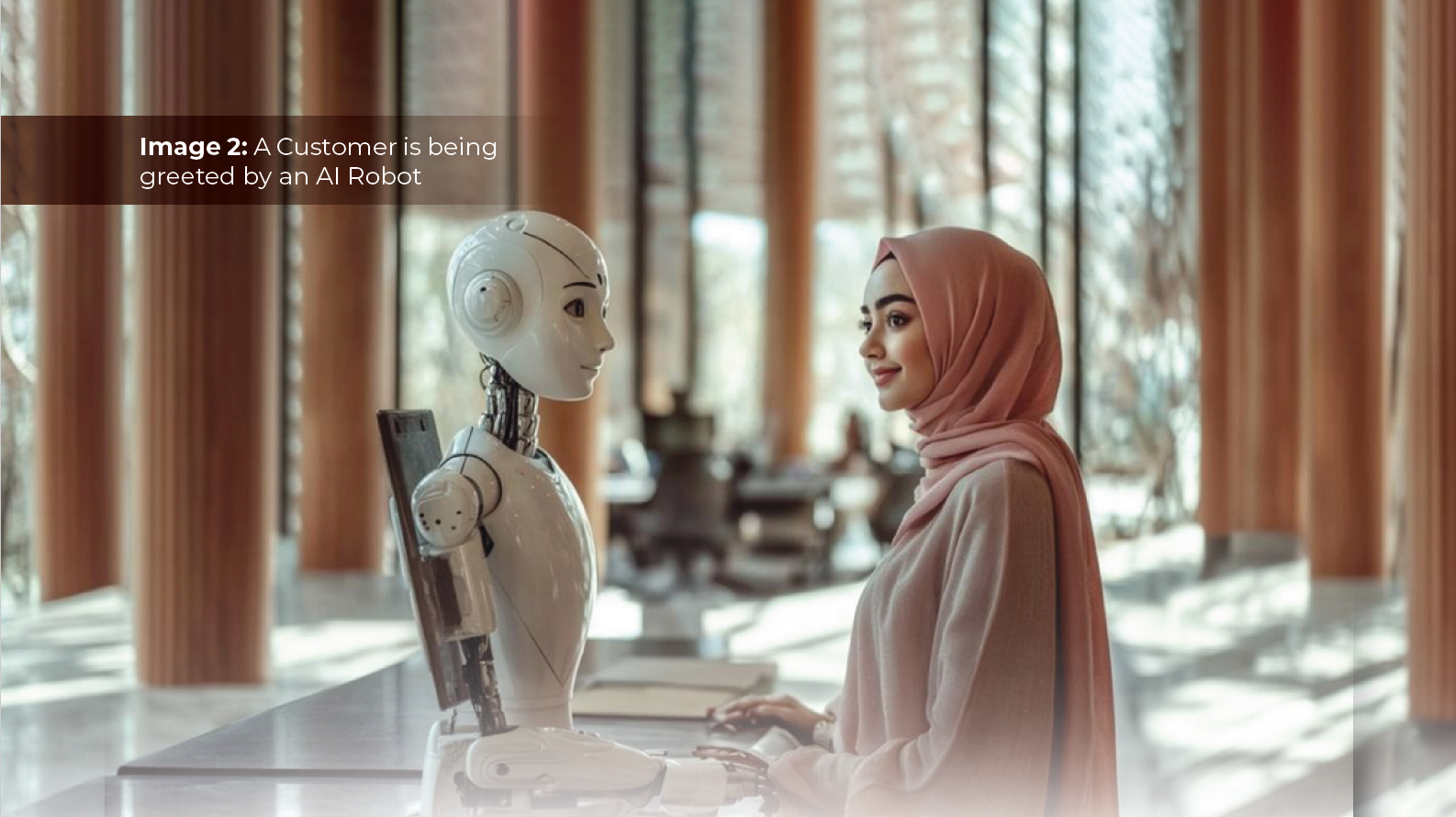
Imagine a future where visiting your local government office feels less like navigating a bureaucratic maze and more like embarking on a journey with a wise and resourceful companion, much like the legendary Sun Wukong. In this reimagined world, instead of a civil servant, you are welcomed by a sophisticated Artificial Intelligent (AI) powered robot, skillfully using its digital capabilities as the Monkey King wielded his magical staff, the Jingubang, to guide you through the complexities of government services with ease. This robotic assistant, equipped with extensive knowledge and computational skills, effortlessly recalls your information, anticipates your needs, and navigates the process with remarkable efficiency. Gone are the days of dreading endless queues, mountains of paperwork, and impersonal interactions. Instead, you’ll encounter a friendly interface and a personalized experience, as the robot seamlessly retrieves your past transactions, understands your requirements, and offers tailored solutions. This isn’t simply a scene from a science fiction story; it’s a vision of a future where technology enhances public service, transforming even the most routine tasks into a surprisingly enjoyable and efficient process. It heralds the beginning of a new chapter where the synergy of human creativity and artificial intelligence leads to a government that is genuinely centered on its citizens and digitally empowered.
Beyond Pak Pandir’s Imagination
Leave behind the era of paper-pushing and embrace a future of streamlined, AI-powered public service. In this brave new world, the AI takes care of the mundace, thus freeing the public servants to unveil their inner creativity. Imagine urban planners dreaming up sustainable cities with AI-powered simulations, or social workers using emotional AI to connect deeply with those in need. Suddenly, those ‘boring’ government jobs become hotbeds of innovation and compassion.
Set in the core of Putrajaya, enveloped in the digitally-equipped and innovative features of a modern Malaysian government office, AI-based instruments are being utilized in the transformation of paperwork and data entry, liberating civil servants from the monotony of the previous routines. Imagine a police officer maneuvering expertly through the complex regulation with the help of AI-based legal analysis software, or a team working together smoothly during a project with the usage of AI-enhanced project management tools. The age of unending meetings and manual report creation becomes history. Instead, civil servants have the time and mental space to focus on strategic thinking, innovating policies, and delivering exceptional public services. Freed from repetitive tasks, they can engage in meaningful citizen engagement, develop creative solutions to complex problems, and truly make a difference in the lives of Malaysians.

The vision for a reimagined public sector, where AI serves to empower both citizens and civil servants, lies at the core of “Malaysia Boleh 2.0.” This initiative focuses on leveraging AI to simplify processes, improve accessibility, and foster a government that prioritizes its citizens. By adopting this ambitious concept, Malaysia can lead the way toward a future in which public services are not only efficient but also genuinely transformative, establishing a new benchmark for governments globally.
Next-Gen Public Service with XP Boost
Malaysia is embarking on a journey into the promising world of AI, a tool poised to reshape public services as we know them. The “Malaysia Boleh 2.0” idea, as proposed in this article, envisions a future where AI not only streamlines processes and enhances accessibility but also fosters a truly citizen-centric government. By harnessing the power of AI, Malaysia is spearheading the creation of a public sector that is both remarkably efficient and exceptionally responsive to the diverse needs of its people.
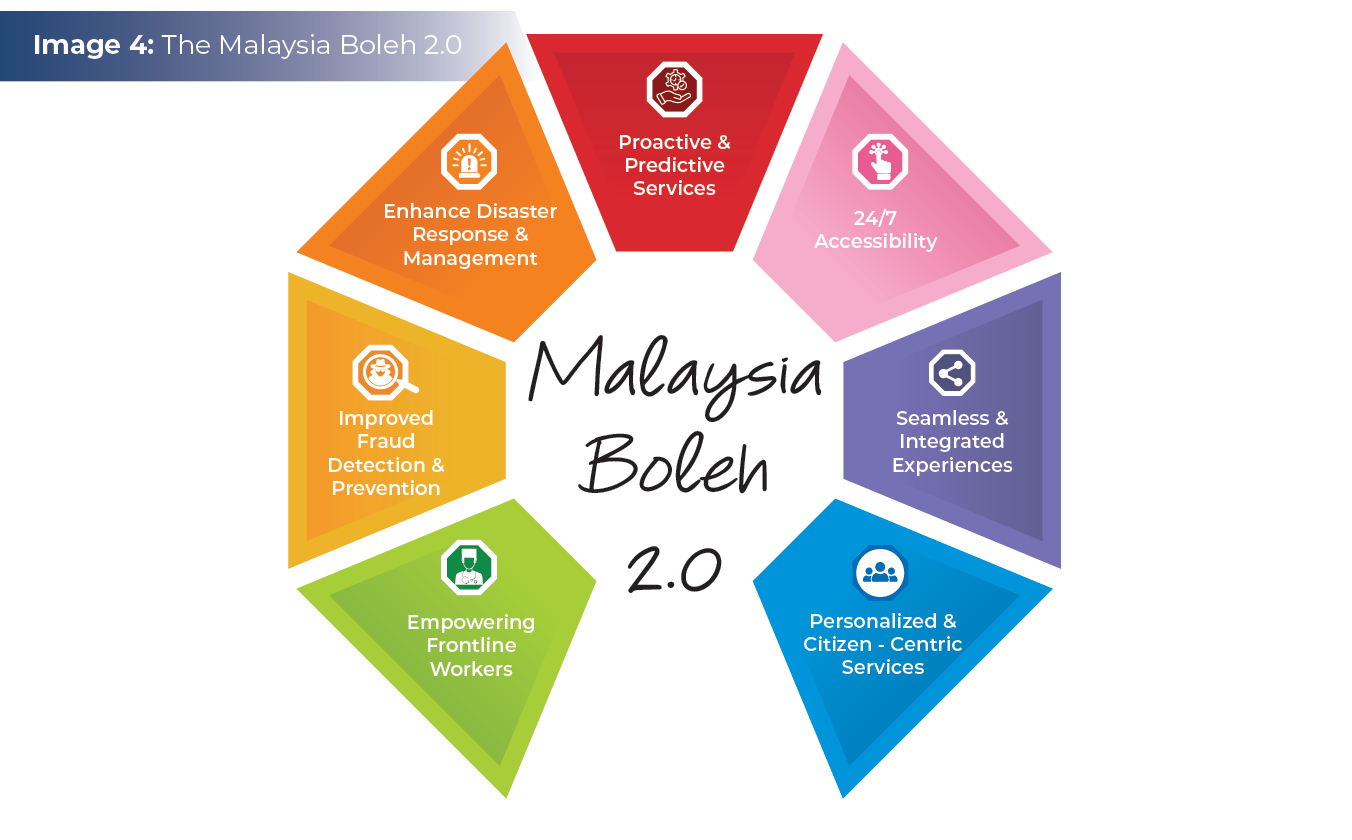
- Proactive & Predictive Services: Envision a government that foresees your requirements even before you articulate them. Through AI’s capacity to analyze extensive datasets and discern patterns, public services can transition notably from a reactive approach to a proactive one. Automated reminders for crucial deadlines, critical health suggestions, or important educational resources could very well become the standard, anticipating your needs before you even realize them.
- 24/7 Accessibility: With the emergence of artificial intelligence (AI), fundamental government services are no longer confined to traditional office hours. However, Malaysia Boleh 2.0 imagines a future where citizens can effortlessly access information, monitor applications, or obtain guidance at any time and from any location. Envision smart cities in which AI-driven traffic management systems optimize traffic flow continuously, while AI-enabled surveillance systems bolster public safety at all hours. Furthermore, AI-powered telemedicine platforms could provide 24/7 virtual consultations and preliminary diagnoses, which is particularly vital in remote regions or during crisis situations. Emergency services could significantly benefit from AI-enhanced dispatch systems that intelligently analyze incoming calls and allocate resources to optimize response times.
- Seamless & Integrated Experiences: AI can transform citizen interactions with government, creating a unified and intuitive experience through streamlined processes, intelligent guidance, automated tasks, and optimized service delivery. This enables Malaysia to create a digital government that is genuinely focused on its citizens, as well as easily accessible and user-friendly.
- Personalized & Citizen-Centric Services: Using AI, government authorities can effectively grasp the requirements and inclinations of each person and personalize the services and communications provided to that individual. This includes providing access to relevant information, such as eligibility criteria or application deadlines for specific programs. For instance, in education, AI-powered intelligent adaptive learning systems can enhance the academic experience for all students, offering personalized support to help each individual succeed.
- Empowering Frontline Workers: AI can equip public servants with the tools and information they need to be more effective. For instance, AI-powered language translation tools can bridge communication gaps with citizens who speak different languages, fostering inclusivity and understanding.
- Improved Fraud Detection & Prevention: The capability of AI to scrutinize large volumes of data can help recognize trends and outliers that may signify fraud or inappropriate use of public resources. This improves the fight against corruption and promotes more effective use of taxpayers’ money.
- Enhanced Disaster Response & Management: AI holds immense potential during a crisis, more so than any other aspect. The use of artificial intelligence to analyze the various types of data available in real time such as social media or sensors will assist the authorities in the rapid assessment of needs in a specific area directing intervention resources and helping the affected population promptly.
But It Ain’t All Sunshine and Rainbows
While the potential of AI to revolutionize Malaysia’s public services is immense, it’s important to acknowledge and proactively address the challenges and ethical considerations that arise with its adoption. One of the most pressing concerns is the potential displacement of jobs due to automation. While AI can undoubtedly streamline many routine tasks, it is crucial to ensure that the transition is managed responsibly, with upskilling and reskilling programs available to help affected workers adapt to new roles.
Furthermore, adopting AI in public services carries risks related to data privacy. Government bodies must collect and analyze large amounts of citizen data in providing services to the masses. Therefore, data security issues must be addressed effectively, and data-sharing practices must be transparent. Ensuring data privacy is essential, as it directly contributes to maintaining public trust in the responsible development and use of AI. If citizens feel their data is misused or insecure, they may become cynical about AI’s potential benefits. In addition to data privacy concerns, AI algorithms also risk replicating existing societal stereotypes and biases. AI systems should be designed and deployed in a just, transparent, and accountable manner, with mechanisms for detecting and correcting any unintended partiality.
Malaysia Boleh 2.0 should not be seen just as the rise of new technology in the country but rather as an ethical change that will make technology and the public sector to be just for everyone. By addressing these challenges head-on and prioritizing ethical considerations, Malaysia can ensure that AI is a catalyst for good, driving positive change and empowering its citizens
Chasing the Great Sage’s Wisdom
The journey towards Malaysia Boleh 2.0, much like Sun Wukong’s arduous pilgrimage to the West, is fraught with challenges and obstacles, such as the potential for job displacement, concerns about data privacy, and the risk of algorithmic bias. Yet, the potential rewards, akin to the sacred scriptures Sun Wukong sought, are immense. This transformative journey aims to do more than just streamline public services into efficient, accessible, and citizen-centric systems. It seeks to build a Malaysia where AI empowers every citizen, regardless of their location or background, to access high-quality services equitably and bridge existing gaps for a more inclusive society. It is a vision of a nation where government officials, armed with data-driven insights, make informed and just decisions, where innovation flourishes, and where public trust is fortified through transparency and accountability. While the path to this AI-powered future may be challenging, the potential benefits, like the wisdom and enlightenment Sun Wukong ultimately attained, far outweigh the trials, leaving us to ponder: what new legends will Malaysia write in this digital age, and what wisdom will it impart to the world?
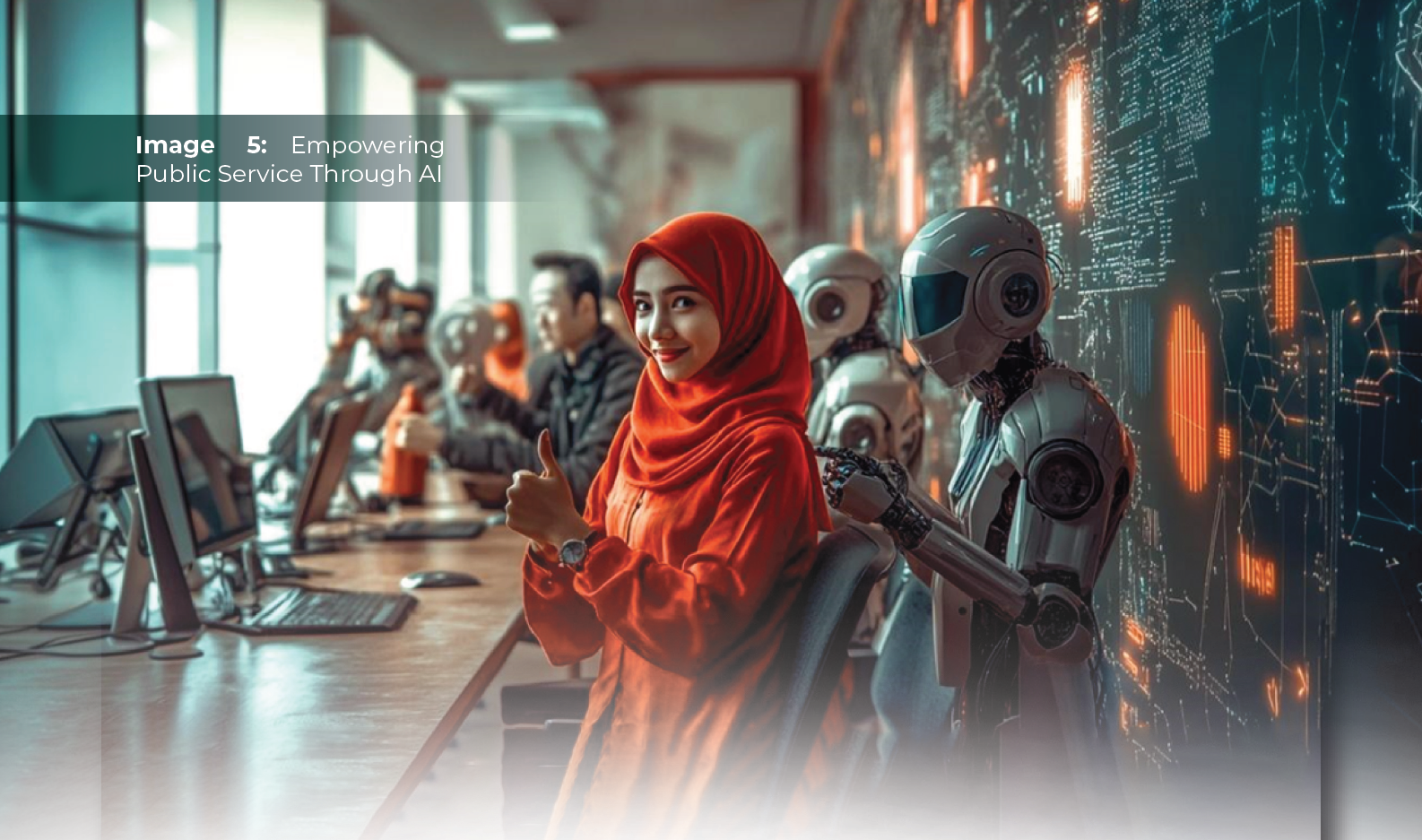
One of the most potent examples signifying the potential of AI creation would be this article, where the content has primarily been written with the assistance of AI but under the careful guidance of a human writer. The images that come along with it also help in this regard. Text and visuals, which are the result of human and AI working in unison, serve as a testament to the harmonious collaboration between man and machine. When nurtured with responsibility and morality, this union has the potential to evolve the role of AI from being just a mere assistive tool to a transformative and resounding force, ushering the public service of Malaysia to a new era of digital immortality.

References
- Costi Perricos and Vishal Kapur (2019) “Anticipatory Government – Preempting Problems Through Predictive Analytics” Deloitte Insights. Available at: https://www2.deloitte.com/us/en/insights/industry/public-sector/government-trends/2020/predictive-analytics-in-government.html.
- Miriam Fernández and Sudeep Kesh (2024) “The Rise of AI-Powered Smart Cities” S&P Global. Available at: https://www.spglobal.com/en/research-insights/special-reports/ai-smart-cities.
- Ts. John Hii Ing Kieng (2024) “Beyond Textbooks: XR and AI Revolutionising Malaysian Education” Taylor’s University. Available at: https://university.taylors.edu.my/en/student-life/news/2024/beyond-textbooks-xr-and-ai-revolutionising-malaysian-edu cation.html.
- Pipplet Team (2023) “Breaking Down Communication Barriers: AI’s Growing Role in Translation and Language Interpretation” ETS Pipplet. Available at: https://blog.pipplet.com/communication-barriers-ai-translation.
- Kevin Levitt (2023) “How Is AI Used in Fraud Detection?” NVIDIA. Available at: https://blogs.nvidia.com/blog/ai-fraud-detection-rapids-triton-tensorrt-nemo.
- Alyson Chapman (2023) “Leveraging Big Data And AI For Disaster Resilience And Recovery” Texas A&M University. Available at: https://engineering.tamu.edu/news/2023/06/leveraging-big-data-and-ai-for-disaster-resilience-and-recovery.html.
- Gemini Advanced at: https://gemini.google.com
- Midjourney at: https://www.midjourney.com/