


Enterprise Architecture (EA) provides a high-level blueprint of an organization’s business processes and IT systems. It shows how these elements are interconnected, shared across the organization, and how they will be improved in the future (Tamm et al., 2022). EA is defined as a holistic view that effectively integrates different domains in business, data, application, and technology in organizations.
The first publications on EA emerged about three decades ago, with the Zachman Framework often regarded as the seminal publication in the field (Zachman, 1987). In the 1990s, The Open Group Architecture Framework (TOGAF) was introduced, which became one of the most widely adopted EA frameworks. TOGAF offered a methodology to design, plan, implement, and manage EA, ensuring business strategies aligned with IT infrastructure. Over the years, frameworks such as the Federal Enterprise Architecture Framework (FEAF) and Department of Defence Architecture Framework (DoDAF) were developed to address the unique needs of government and defence sectors, respectively, further demonstrating the versatility of EA across different sectors. Despite its long existence, it is not widely adopted by organizations (Ahmad et al., 2020).
In the landscape of Malaysian Public Sector, the central piece of this effort is the MyGovEA framework, which was developed to guide Malaysian government agencies in building and implementing EA practices in a consistent manner. MyGovEA, formerly known as 1GovEA, is the Malaysian Government’s EA framework. It was launched in 2013 by the Malaysian Administrative Modernization and Management Unit (MAMPU), which is now known as the Jabatan Digital Negara (JDN). Initially, the government targeted 25 public sector agencies to have implemented EA by the end of 2016, but only five agencies adopted EA, including two federal agencies, which were included in the EA pilot project (Ahmad et al., 2020; Hussein et al., 2017). To date, only a few organizations have either implemented or are in the process of implementing EA.
EA helps organizations to improve business and IT alignment, enhance decision making, increase agility and innovations. Currently, legacy systems, data silos and slow, manual processes continue to dominate some organizations. Information is scattered across ministries and departments and decision-making is delayed by latency with limited visibility. Every business function must have a process and that process must be well defined before it can be automated. This includes clarifying data ownership and assigning responsibilities. EA is needed to help restructure the process instead of automating simply for the sake of automation. If a flawed process is automated, it only accelerates failure. The benefits of EA is shown in the Figure 1.
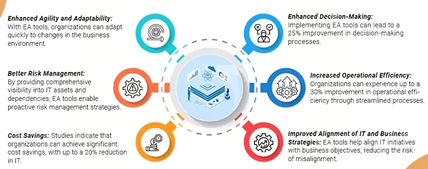
Figure 1: Benefits of Implementing Enterprise Architecture (Choudhary, 2024)
While its potential benefits are significant, many organizations struggle with its implementation and struggle to embrace it. There are a few reasons why this might be the case.
The Slow Adoption of Enterprise Architecture
- Lack of executive sponsorship
Without strong sponsorship from executive leadership, Secretary General or Deputy Secretary General who also shoulders the responsibility of a Chief Digital Officer (CDO), the EA Office (EAO) lacks the necessary authority to drive change across different departments and functions. EA often requires breaking down silos and enforcing standards, which can create resistance from various stakeholders. EA often demands significant changes to existing processes, systems, and even organizational culture. Without strong leadership to champion these changes, resistance from employees and departments can be overwhelming.
Organizations often fail to embrace EA because of a lack of business buy-in, a failure to demonstrate tangible value, and a perception that EA is an outdated, overly bureaucratic function (Wasielewski, 2025). It is also difficult to get buy in from the business people as EA is not just a technical exercise; it’s about connecting technology to business outcomes. If business leaders fail to see the value or are not actively engaged, EA efforts will struggle to gain traction.
Strong sponsorship helps bridge the gap between IT and business, ensuring that EA initiatives are aligned with broader business objectives and that stakeholders understand their relevance.
- IT Led EA
When EA is driven solely by IT, the team might prioritize the adoption of new, cutting-edge technologies without a clear understanding of the business problem they are supposed to solve. On the other hand, business leaders often perceive it as just another IT project, focused on technical infrastructure, applications, or data models. They do not see how it directly impacts their service delivery, customers, or operational efficiency.
The language used by IT professionals can often be highly technical, further alienating business stakeholders who may not understand the jargon or see the direct relevance to their domain. IT teams, while understanding the technical landscape, may not fully grasp the intricate nuances of business processes, market dynamics, customer needs, or competitive pressures.
- Poor communication with stakeholders
Poor communication with stakeholders is another critical and extremely common reason why EA initiatives fail, even when there might be some level of sponsorship. Poor communication can lead to either inflated expectations (e.g., EA will solve all our problems overnight, or they will obtain a new system right after) or deflated expectations (e.g., EA is just another IT bureaucracy).
- Resistance to change
Within many organizations, individual departments or teams prefer to maintain their own systems and processes. They resist standardization and governance, which are core tenets of EA, as they fear it will limit their autonomy and flexibility (Entando, 2025). For some, the idea of having their operations documented and standardized can feel like a loss of control. EA creates a clear, shared blueprint of how a department’s processes, data, and technology interconnect with the rest of the organization. While this transparency is a core benefit for the organization as a whole, it can expose departmental inefficiencies, redundant applications or malpractice that a department is managing in isolation.
- Incompetent EA Vendor
The vendor may have the technical skills but lack an understanding of the client’s specific industry, business culture, or strategic objectives. This disconnect makes it difficult for them to create an architecture that is practical and relevant.
This incompetence doesn’t necessarily mean a lack of technical skill, but rather a deficiency in the specific mix of skills required to successfully deliver an EA project. EA is a unique discipline that requires a blend of technical expertise, business acumen, and soft skills. Many vendors are competent in one or two of these areas but not all three, leading to project failure. In addition, this failure can be attributed to several key reasons, including a lack of clear scope, poor vendor selection, and misaligned expectations. The consequences can be significant, leading to wasted resources, a loss of trust in the EA function, and a setback in the organization’s strategic goals.
Using EA to Engineer Digital Transformation
Secure Executive Sponsorship and Governance: This is the most crucial step as without strong support from top leadership, EA initiatives will likely fail. Leaders must champion EA as a strategic necessity, not just an IT project. A governance framework must be established to oversee EA, defining clear roles and responsibilities. This framework should ensure that all new projects and changes align with the overarching architecture. Top management support provides the resources and the authority in implementing EA.
To counter this lack of confidence, EA must be positioned and executed as a joint business-IT strategic endeavour, not just an IT project: The ability of IT people to “speak business” is not just a nice-to-have skill; it’s a critical success factor for EA. The core reason is to bridge the value gap between technology and business outcomes.
Correctly positioning of EA within an organisation is critical to the success and scope of the capability. if not positioned at a corporate level, how else would an organisation-wide governance be possible? Enterprise Architecture is a strategic capability (Bakar, 2025), which clearly defines its place within the organisation, which means the EAO could be placed under the CDO to elevate its function from ‘IT’ to ‘Business’. When the EAO reports to the CDO, it is no longer just a technical function; it becomes a strategic partner in the digital transformation journey.
EA is still not widely understood outside of specialized circles. Many people, even within IT and business, have misconceptions about what it is and what it does. It’s often seen as overly technical, purely for the IT department, or a one-time project with little to no business value. EA can also be difficult to explain. It involves many abstract concepts, and the industry has its own language and frameworks (like TOGAF or Zachman). EAO should focus on outcomes rather the frameworks. Instead of talking about TOGAF, we should speak about how EA will reduce costs, improve efficiency, or enable new value streams. Success stories and case studies is an excellent way to encourage people to adopt EA. One can emulate the Ministry of Housing and Local Government (KPKT) successful journey with EA. KPKT’s strategic use of EA led to them winning the Excellence Award in the Digital Customer Experience category, showing how their forward-thinking approach has significantly improved customer interactions.
Building a strong business case will convince stakeholders: The EAO should speak the language of business that people do not feel that EA is purely a technical exercise. They should be able to explain the impact on how EA can support business goals or what is in for the stakeholders if they embark on the project.
EA involves huge investment not just in terms of software tools and consultants, but also in creating credible EA architects and change management. Hence, sufficient financial resources are critical to help organization to obtain necessary resources, skillset and competency. On the other hand, EA team should also prove that by investing in them, the organization will produce better, more efficient outcomes to improve service delivery to the ‘rakyat’ and also dependent agencies.
EA projects can be extremely complex, and the quality of the team, whether internal or external is the single biggest determinant of success. A poorly trained or unreliable vendor can turn a strategic investment into a costly failure. Organizations need to carefully pick their EA vendor by scrutinizing their consulting experiences. One should also review the vendor’s certifications and capability before awarding the project to them.
A Small Scope is Better: A smaller project has fewer variables and is easier to manage. If the initial project falters, the impact is minimal, and the team can learn from the experience without a major loss of time or resources. In contrast, a big bang project can fail spectacularly, leading to significant financial and operational setbacks. The EA team can deliver a quick win by focusing on a specific and high-priority area. This demonstrates the value of EA to stakeholders, builds credibility, and secures support for future, larger initiatives. It is much easier to get buy-in for subsequent phases when the first one has already shown a positive return.
Conclusion
This article aims to share some key insights for planning and implementing EA in the public sector. By embracing these strategic insights, leaders can move beyond outdated systems and truly engineer a digital transformation that better serves both their organization’s mission and the public. The journey may be challenging, but with a clear plan, the rewards of a truly aligned and agile public sector are well within reach.
RUJUKAN
Ahmad, N. A., Drus, S. M., & Kasim, H. (2020). Factors That Influence the Adoption of Enterprise Architecture by Public Sector Organizations: An Empirical Study. IEEE Access, 8, 98847–98873. https://doi.org/10.1109/ACCESS.2020.2996584
Bakar, N. A. A. (2025). AI-Enabled Enterprise Architecture: Paving the Way for Digital Transformation in Malaysia’s Public Sector and Higher Education. UTM News Hub. https://news.utm.my/2025/02/ai-enabled-enterprise-architecture-paving-the-way-for-digital-transformation-in-malaysias-public-sector-and-higher-education/
Choudhary, A. (2024). 13 Proven Steps for Choosing and Leveraging Enterprise Architecture Tools in 2025. A3 Logics. https://www.a3logics.com/blog/steps-for-choosing-and-leveraging-enterprise-architecture-tools/
Entando. (2025). Navigating the Challenges of Enterprise Architecture. https://entando.com/it/composability/navigating-the-challenges-of-enterprise-architecture/
Hussein, S. S., Naz’ri Mahrin, M., & Maarop, N. (2017). Sustainability through Innovations Of Enterprise Architecture (EA) in Public Sector’s Management: Issues & Challenges. Journal of Southeast Asian Research, 2017, 1–13. https://doi.org/10.5171/2017.722027
Tamm, T., Seddon, P. B., & Shanks, G. (2022). How enterprise architecture leads to organisational benefits. International Journal of Information Management, 67(November 2020), 102554. https://doi.org/10.1016/j.ijinfomgt.2022.102554
Wasielewski, J. (2025). 7 Common Enterprise Architecture Challenges & Solutions. Value Blue. https://www.valueblue.com/blog/7-common-enterprise-architecture-challenges-and-how-to-solve-them#authors
Zachman, J. A. (1987). A framework for information systems architecture. IBM Systems Journal, 26(3).