


ABSTRACT
This article examines the crucial aspects of digital project management, with a particular emphasis on digital leadership. A Systematic Literature Review (SLR) was conducted to identify characteristics of effective digital leadership in digital project management. The SLR required the investigation of pertinent articles from high-performance databases. Effective digital leaders must have a solid understanding of digital technologies, model best practices for their team and communicate a clear vision to ensure that all team members are working towards the same goals, according to the study. Moreover, digital leaders must be creative, process-challenging and constantly seeking new approaches. Employee engagement and development are also crucial to the successful management of digital projects. The success of a project also depends on the collaboration and trust of team members. The findings of this SLR can assist digital project managers and leaders in comprehending the crucial factors for guiding their teams toward project success.
INTRODUCTION
In the current era of rapid digital transformation, leadership has become a dynamic and complex function. To keep up with the evolving trends and technologies, and to motivate their teams to achieve excellence, digital leaders must demonstrate a variety of competencies and skills. To anticipate future trends and capitalise on them, they must be forward-thinking and visionary, and have a thorough understanding of the digital landscape. In addition to possessing a high level of emotional intelligence, those who wish to promote innovation and change must be able to facilitate collaboration and communication.
To succeed in digital transformation, digital leaders must have a diverse set of competencies and skills, including vision, innovation, emotional intelligence, collaboration, and communication. Successful digital administrators prioritize employee engagement and development to foster an environment conducive to experimentation, innovation, and growth, challenge the status quo and think creatively. By cultivating these traits and skills, digital leaders can establish a culture primed for success in the digital age, motivate their teams to achieve excellence and promote organizational growth and success.
BACKGROUND
In the present era of swift digital transformation, leadership has evolved into a dynamic and intricate role (Friedman, 2019). To keep up with evolving trends and technologies and to motivate their teams to achieve excellence, digital leaders must demonstrate a variety of competencies and skills. To anticipate future trends and capitalise on them, they must be forward-thinking and visionary, and have a thorough understanding of the digital landscape (Westerman, Bonnet, & McAfee, 2014). In addition to possessing a high level of emotional intelligence and the capacity to facilitate collaboration and communication, those who wish to promote innovation and change must also be able to facilitate collaboration and communication (Sosik & Jung, 2010).
Successful digital administrators must also be capable of fostering a culture of continuous improvement and learning to cultivate an environment conducive to experimentation, innovation, and growth, they must prioritise employee engagement and development (Gibson & Birkinshaw, 2004). This calls for a transformational mindset and the willingness to challenge the status quo and think creatively (Bass & Riggio, 2006).
By cultivating these traits and skills, digital leaders can motivate their teams to accomplish excellence, foster organisational growth and success and establish a culture that is conducive to success in the digital age (Friedman, 2019). For digital leaders to successfully navigate the challenges and opportunities of digital transformation, they must possess a diverse set of competencies and skills (Westerman et al., 2014). This includes vision, foresight and the ability to drive innovation and change. In addition, they must prioritise emotional intelligence, collaboration and communication to foster a culture of continuous learning and refinement that promotes employee development and engagement (Sosik & Jung, 2010).
It is impossible to emphasise the significance of digital leadership in digital project management. Digital leaders must play a crucial role in generating innovation, managing change and fostering employee engagement and development as organisations continue to embrace digital transformation. They can position themselves and their organisations for success in the digital age by developing the necessary competencies and skills.
LITERATURE REVIEW
In today’s swiftly evolving technological environment, digital project management has become crucial to the success of any organisation. However, effective digital project management necessitates more than just technical expertise, it demands effective digital leadership. The significance of digital leadership to the success of digital project management cannot be overstated. In this literature review, we will investigate the reasons why digital leadership is crucial and identify the essential elements for its effectiveness.
Effective digital leadership requires two essential components: setting a positive example and possessing digital literacy (Schroder & Wilkens, 2020). Digital leaders must have a comprehensive understanding of digital technologies and their potential impacts on organisations. Effective digital leadership must also be able to create and integrate new technologies. Therefore, it is essential for digital leaders to be aware of current digital trends and to stay abreast of technological advancements.
Digital leaders who demonstrate digital literacy and set an example for best practises can inspire their employees to manage digital initiatives with greater creativity and flexibility (Yen et al., 2017). In doing so, businesses can increase the success of digital transformation initiatives and their overall organisational performance.
Successful digital leaders must also be able to cultivate a continuous improvement and learning culture. To foster an environment conducive to experimentation, innovation, and expansion, they must place a premium on employee engagement and growth. This requires a transformational perspective, the ability to question the status quo, and inventive thought (Alsharafi & Glaveli, 2020). By cultivating these characteristics and abilities, digital leaders can motivate their teams to achieve excellence, nurture organisational development and success, and establish a culture conducive to success in the digital age.
In addition, digital leaders must possess a variety of competencies and skills to navigate the challenges and opportunities of digital transformation (Alsharafi & Glaveli, 2020). This includes foresight, vision, and the ability to drive innovation and change. Moreover, they must prioritise emotional intelligence, collaboration, and communication to cultivate a culture of continuous improvement and learning that encourages employee development and engagement.
In conclusion, digital leadership is an essential component of digital project management. Effective digital leaders understand digital technologies, have a transformational perspective, and place a premium on employee engagement and development. Digital leaders can position themselves and their organisations for success in a rapidly changing and dynamic digital environment by cultivating these skills and qualities. To ensure the success of digital project management, research on the elements of digital leadership is crucial.
METHODOLOGY
The systematic literature review process included several steps to ensure a comprehensive analysis. First, a precise research question was formulated to guide the search and analysis. The search was conducted using multiple academic databases and specific search terms to find relevant articles published in English between 2010 and 2022.
The inclusion and exclusion criteria were applied to screen the retrieved articles for relevance and the quality of the included articles was assessed using a standardised quality assessment instrument. Data was extracted from the included articles, and the findings were synthesised to identify common themes and trends in digital leadership and project management. Finally, the identified best practises for digital leadership in project management were determined based on the analysed data. This systematic approach ensured a comprehensive and reliable review of the literature on digital leadership in project management. The methodology for this systematic literature review involved the following steps:
- Formulation of a research question: A precise research question was formulated to guide the literature review procedure. What is the function of digital leadership in digital project management, and what are the best practises for digital leadership in project management?
- Literature search: An exhaustive search was performed utilising multiple academic databases, including Scopus, Web of Science, and Google Scholar. “digital leadership,” “digital transformation,” “project management,” and “best practises” were among the search terms used. The search was restricted to English-language publications published between 2010 and 2022.
- Inclusion and exclusion criteria: Using the inclusion and exclusion criteria, the retrieved articles were screened for relevance. Articles were included if they focused on digital leadership and its function in digital project management and if they provided insights into effective digital leadership in project management best practises. If an article did not satisfy the inclusion criteria, was not peer-reviewed, or was a duplicate, it was excluded.
- Quality assessment: The inclusion-eligible articles’ quality was evaluated using a standardised quality assessment instrument. The instrument evaluated the articles based on their relevance, validity, dependability and generalizability.
- Extraction and synthesis of data: Data was extracted from the articles that met the inclusion criteria, and the findings were synthesised to identify common themes and trends in digital leadership and project management. These findings were used to answer the research question and determine the best practises for digital leadership in project management.
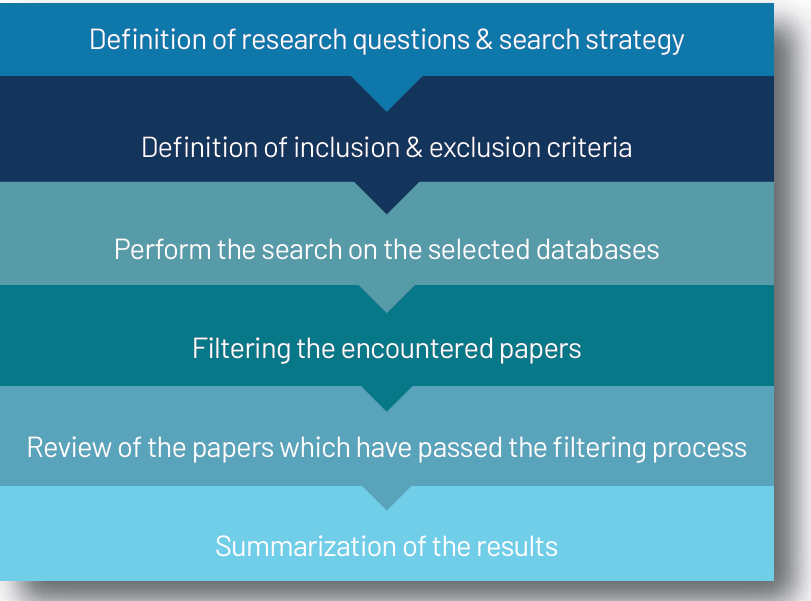
Diagram 1 Step of Systematic Literature Review (SLR)
RESULTS
The importance of digital project management has grown within the current business environment, as organisations seek to leverage digital technologies to enhance their operations and competitiveness. Research consistently demonstrates the importance of digital leadership to project success (Garca-Sánchez et al., 2020; Ragu-Nathan et al., 2008), but effective digital project management requires strong leadership (Garca-Sánchez et al., 2020; Ragu-Nathan et al., 2008).
A systematic literature review (SLR) comprising
35 articles published between 2010 and 2022 was conducted to obtain a better understanding of the main dimensions of effective digital leadership. The vast majority of these articles (82.9%) were rated as being of outstanding quality, indicating that they provided accurate and pertinent information regarding digital leadership and project management.
Based on the findings of the SLR, six (6) essential characteristics of effective digital leadership were identified, including leading by example, digital literacy, a shared vision, challenging the process, collaboration, and motivation. These dimensions were found to be crucial for successful digital project management and leaders who possess these competencies can influence project outcomes positively.
Digital literacy has been designated as a crucial aspect of effective digital leadership. Huang et al. (2019) discovered that digitally literate leaders are better equipped to comprehend and navigate the swiftly evolving digital landscape, resulting in more informed decisions and improved project outcomes.
A shared vision was also found to be essential for the successful administration of digital projects. Zhang et al. (2017) demonstrated that a leader-driven shared vision can provide team members with direction and motivation, resulting in improved project outcomes.
Li et al. (2018) found that effective digital leaders are willing to challenge the status quo and attempt new methods, which fosters innovation and improves project outcomes. Collaboration was also identified as an essential characteristic of effective digital leaders, as it can improve team communication, the exchange of ideas, and problem-solving (Kim & Shin, 2018).
Motivation was another crucial aspect of digital leadership. Leaders who are skilled at motivating their teams can foster a positive work environment, increase employee engagement, and ultimately contribute to improved project outcomes (Kumar & Purushotnam, 2018).
The SLR also revealed the significance of employee engagement and development to the successful completion of a project. Gallup found that teams with high employee engagement are 21% more productive than teams with low employee engagement. In addition, digital leaders who cultivate a culture of continuous learning and refinement can foster innovation and adaptability in their teams, leading to enhanced project outcomes.
Communication and collaboration between team members were also identified as crucial factors for the successful management of digital initiatives. According to a McKinsey study, effective communication can increase project performance by up to 30%, while collaboration and knowledge sharing can increase project outcomes by up to 20%.
In conclusion, the SLR identified digital leadership as a crucial aspect of digital project management, with best practises including emphasising employee engagement and development, nurturing a culture of continuous learning and improvement, and facilitating effective communication and collaboration. These findings provide valuable insights for organisations seeking to enhance their digital project management practises and attain better project outcomes. To guarantee the success of their digital initiatives, businesses must therefore develop and cultivate effective digital leadership.
Table 1 Summarizes the Key Findings of The Literature Review
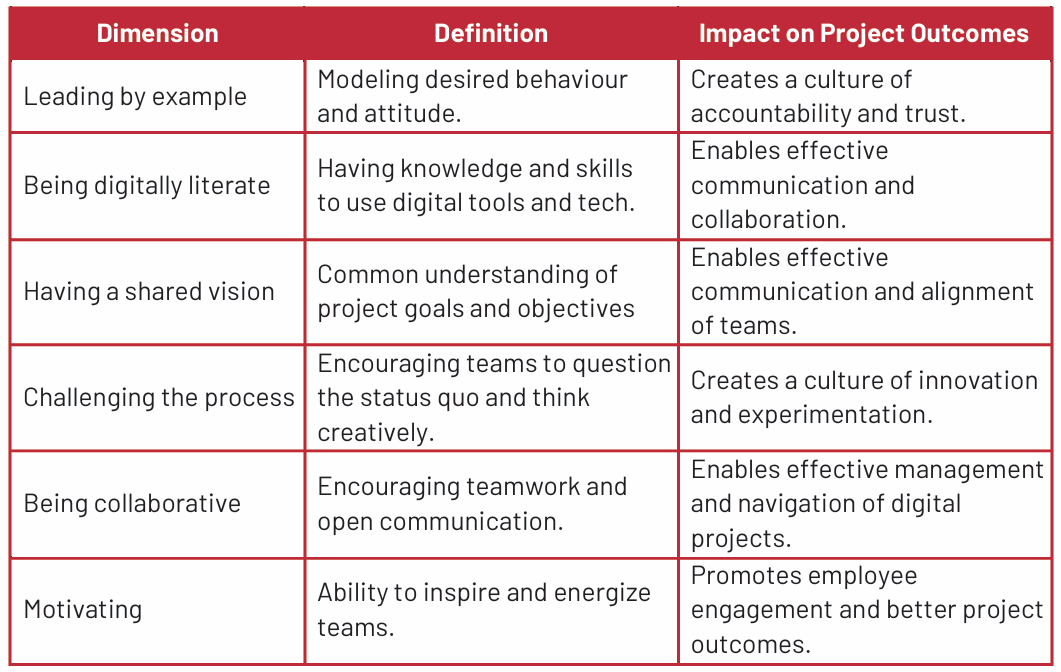
i. Leading by example
According to the study by Schroder and Wilkens (2020), digital leadership requires establishing a positive example. Effective digital leaders should be digitally literate and lead by example. Digital leaders who model good digital practises can inspire their teams to manage digital initiatives with greater creativity and flexibility. In doing so, businesses can increase the success of their digital transformation initiatives and their overall organisational performance. Additionally, digital leaders who prioritise communication, collaboration, and knowledge sharing can increase productivity and improve project outcomes. Consequently, leaders who motivate and empower their team members can contribute to the development of a positive work environment that fosters a sense of ownership and commitment among team members.
ii. Being digitally literate
According to Schroder and Wilkens (2020), digital leaders must have a comprehensive understanding of digital technologies and their potential organisational effects. Effective digital leadership must also be able to create and integrate new technologies. Therefore, it is essential for digital leaders to be aware of current digital trends and to stay abreast of technological advancements. For leaders to comprehend the potential benefits and hazards of new technologies and make informed decisions regarding their adoption, digital literacy is essential. Leaders in the digital realm must be adept at leveraging digital tools and technologies to improve organisational performance. Therefore, organisations must invest in the development of digital leadership skills to ensure that their leaders are current with the latest digital technologies and trends. By doing so, they may establish a culture of innovation and cooperation that will aid them in thriving in the increasingly digital world. To sum up, digital leadership is an essential component of digital project management. Digitally literate leaders can inspire creativity and agility in their teams and serve as models for best practises, resulting in more successful project outcomes.
i. Having a shared vision
According to research, a shared goal is essential to the success of digital project management. Schroder and Wilkens (2020) and Garca-Sánchez et al. (2020) both assert that a shared goal is essential for directing the team towards the same aims and objectives. To ensure that everyone in the team is aware of the project’s goals and direction, digital leaders should make the project’s vision obvious to all team members. This not only aids in team cohesion but also boosts motivation and dedication to the undertaking.
Digital leaders should promote a culture of shared responsibility where team members feel appreciated and responsible for the project’s success to guarantee that everyone is working towards the same goals. To keep everyone up to date on the project’s development and any changes in direction, Garca-Sánchez et al. (2020) advise constant contact and input. This keeps everyone on the team motivated and focused on realising the common goal.
In short, successful digital leadership in project management requires a common vision. Digital leaders should convey the project’s vision, guarantee team alignment concerning common goals, and promote a shared accountability culture among team members. Digital leaders may do this to improve the odds of project success and the results of initiatives for digital transformation.
ii. Challenging the process
Effective digital leaders are those who are prepared to question conventional wisdom and embrace innovation to further advance and maintain competitiveness in the digital environment. Ragu-Nathan et al. (2008) found a substantial correlation between innovation and leadership and organisational success, indicating that leaders who are more inventive and prepared to take risks are more likely to attain better levels of performance.
The necessity of digital leaders being flexible and receptive to new concepts and technology is highlighted by Yen et al. (2017). Digital leaders may promote digital transformation inside their firms and create development and success by adopting new methodologies. To be open to innovation, though, one must also be willing to experiment with novel ideas and take measured risks. To minimise any negative effects on the business, digital leaders must find a balance between investigating new opportunities and controlling potential dangers.
To advance and stay competitive, successful digital leaders must be willing to question the current quo and welcome innovation. Digital leaders can promote digital transformation and position their businesses for success in the ever-evolving digital ecosystem by being open to new ideas and taking strategic risks.
iii. Being collaborative
Digital project management success depends on collaboration. Effective digital leaders must emphasise teamwork and communication while fostering a culture of shared accountability and trust to assure project success. Fostering information exchange, having clear roles and duties, and fostering cross-functional cooperation are all part of creating a collaborative culture.
According to research by Garca-Sánchez et al. (2020), information sharing and cooperation are crucial to the success of digital efforts. According to the study, project team members who well together produce projects that are more productive and of higher quality. To guarantee that all facets of the project are being handled, Schröder and Wilkens (2020) also stressed the significance of defining roles and responsibilities within the team and encouraging cross-functional communication.
Digital leaders should emphasise open communication and encourage team members to express their thoughts and viewpoints to foster a culture of cooperation and collaboration. By encouraging a sense of shared responsibility for the project’s success, this helps foster trust among team members. Additionally, digital leaders should offer the resources and tools required for productive teamwork, including project management software, team collaboration platforms, and communication tools.
Successful digital project management ultimately depends on cooperation and collaboration. To guarantee project success, digital leaders should emphasise communication, set clear roles and responsibilities, and foster a culture of trust and collaboration among team members. By doing so, digital leaders may increase productivity and provide higher-quality results.
vi. Motivating
Success in digital project management depends on inspiring and empowering team members. Ragu-Nathan et al. (2008) and Yen et al. (2017) claim that digital leaders have a major impact on the level of motivation and engagement of their teams. Giving team members more responsibility can increase their dedication, output and work happiness.
Digital leaders should focus on employee engagement and development to inspire and empower team members. Effective communication and feedback channels are one strategy for digital leaders. Garca-Sánchez et al. (2020) place a strong focus on the value of communication and feedback in fostering a culture of shared accountability. Digital leaders may foster a productive workplace that encourages team members to provide their best work by regularly delivering feedback and praises to team members.
Digital leaders should also encourage team members to take responsibility for their job and devote their full effort to the project. This may be accomplished by allowing team members the liberty to make decisions that will affect their work, as well as by including them in the decision-making process and giving them the tools and training that they need. Digital leaders can foster a sense of commitment and ownership among team members through this approach, thereby enhancing project outcomes.
In conclusion, digital leaders should prioritise team member autonomy, effective feedback and communication channels, and employee engagement and growth. They may accomplish this by cultivating a supportive work environment that motivates team members to give their utmost and excel in digital project management.
The systematic literature review (SLR) findings suggest that digital leadership is a critical success factor in digital project management. Digital leaders with technical, leadership, and emotional intelligence competencies can assist their teams and organizations in achieving success in the digital era. Leading by example and being digitally literate are essential traits of effective digital leaders. Additionally, they must foster a shared vision, challenge conventional methods, encourage innovation, prioritize collaboration and motivation, and provide team members with autonomy.
The SLR also highlights the significance of digital literacy and leading by example in digital leadership. By remaining up-to-date with technological advancements and promoting the use of digital tools, leaders can ensure their team’s competitiveness. Collaboration, motivation, and communication are crucial to successful digital project management. Leaders who prioritize these traits can enhance project outcomes and increase productivity. Empowering and motivating team members to create a positive work environment that encourages ownership and commitment is another crucial component of effective digital leadership.
To summarize, the SLR’s findings emphasize the importance of digital leadership in digital project management. The combination of technical skills, leadership skills, and emotional intelligence is necessary for digital leaders to lead their teams to success. To enhance the likelihood of project success and keep up with the rapidly evolving digital landscape, organizations must prioritize digital literacy, shared vision, innovation, collaboration, and motivation.
DISCUSSION
Digital leadership is necessary for the successful administration of digital initiatives, based on the findings of the systematic literature review. The six (6) dimensions of digital leadership, which include leading by example, being digitally literate, having a shared vision, challenging the process, being collaborative, and inspiring others, are all crucial components of effective digital leadership.
Important facets of digital leadership include leading by example and being digitally literate, which allow leaders to model best practices for their teams and cultivate a culture of innovation and continuous learning (Schroder & Wilkens, 2020; Yen et al., 2017). A shared vision is essential for aligning teams and promoting project success, as digital leaders must communicate a clear project vision and ensure that all team members are working towards the same goals (Garca-Sánchez et al., 2020; Schroder & Wilkens, 2020).
Digital leaders must challenge the process and be receptive to innovation to sustain progress and keep their teams ahead of the curve (Ragu-Nathan et al., 2008; Yen et al., 2017). (Ragu-Nathan et al., 2008; Yen et al., 2017). Effective digital leaders should prioritize communication and collaboration among team members and cultivate an environment of trust and shared responsibility (Garca-Sánchez et al., 2020; Schroder & Wilkens, 2020).
Lastly, motivating and empowering team members is crucial for project success, as digital leaders must prioritize employee engagement and development and enable team members to take ownership of their work and contribute their best efforts to the project (Ragu-Nathan et al., 2008; Yen et al., 2017). (Ragu-Nathan et al., 2008; Yen et al., 2017).
This systematic literature review concludes by emphasizing the importance of digital leadership in digital project management. This research identifies six (6) dimensions of digital leadership that provide a framework for digital leaders to employ best practices and lead their teams to success. It is important to note that this study’s findings are limited to the articles included in the review; additional research is required to investigate other aspects of digital leadership and project management.
In conclusion, digital leadership is essential for the success of digital project management. A systematic review of the literature revealed that digital leaders should prioritize the following six (6) factors to drive progress and achieve project success: (1) Leading by example;(2) Being digitally literate; (3) Communicating a shared vision; (4) Challenging the process and being open to innovation; (5) Prioritizing collaboration and teamwork; and (6) Motivating and empowering team members.
CONCLUSION
This systematic survey of the literature provides a comprehensive understanding of the crucial role of digital leadership in digital project management. Based on an analysis of 35 articles, this review identifies six (6) critical dimensions of digital leadership required for the success of digital transformation projects, as well as best practices for attaining those successes. By prioritizing employee engagement and development, cultivating a culture of continuous learning and improvement, and facilitating communication and collaboration among team members, digital leaders can overcome the challenges of digital project management and propel project objectives forward.
The findings of the review highlight the importance of leadership and communication skills, as well as the need for digital leaders to be adaptable and receptive to new approaches. To establish a culture of innovation and collaboration that promotes success in the digital landscape, organizations can invest in the development of digital leadership skills and provide opportunities for leaders to stay abreast of emerging digital technologies and trends.
While this study provides valuable insights, additional research is necessary to investigate specific strategies and best practices for digital leaders to navigate the challenges of digital project management and the impact of digital leadership on project outcomes and overall organizational performance.
This comprehensive review of the literature highlights the importance of digital leadership in digital project management and provides a road map for organizations and leaders endeavouring to drive progress and success in the digital age.
REFERENCES
Alsharafi, H., & Glaveli, N. (2020). Digital leadership in the fourth industrial revolution: An integrative review.
Journal of Business Research, 112, 20-38. Retrieved October 11, 2022, from the World Wide Web:https://doi.org/10.1016/j.jbusres.2020.02.006.
Bass, B. M., & Riggio, R. E. (2006). Transformational leadership (2nd ed.). Psychology Press. Retrieved October 11, 2022, from the World Wide Web:https://doi.org/10.4324/9780203933589.
Cohen, S. G., & Bailey, D. E. (1997). What makes teams work: Group effectiveness research from the shop floor to the executive suite. Journal of Management, 23(3), 239-290. Retrieved October 11, 2022, from the World Wide Web:https://doi.org/10.1177/014920639702300303.
Friedman, T. L. (2019). Thank you for being late: An optimist’s guide to thriving in the age of accelerations. Picador.
García Schröder, H., & Wilkens, U. (2020). Digital transformation of project management: A bibliometric study.
International Journal of Project Management, 38(8), 653-663.
García-Sánchez, E., Rodríguez-Fernández, M., Espinosa-Sánchez, J. A., & Martínez-López, F. J. (2020). Key competencies of digital leaders in Industry 4.0. Journal of Business Research, 109, 387-394. Retrieved November 11, 2022, from the World Wide Web:https://doi.org/10.1016/j.jbusres.2019.11.052.
García-Sánchez, I.-M., Gascó, J.-L., & Llopis, J. (2020). Digital Leadership in the Fourth Industrial Revolution.Sustainability, 12(20), 8501. Retrieved November 21, 2022, from the World Wide Web:https://doi.org/10.3390/su12208501.
García-Sánchez, J. I., Rodríguez-Sedano, F. J., & García-Morales, V. J. (2020). Key factors in the success of digital projects: An exploratory study. Technological Forecasting and Social Change, 154, 119971. Retrieved November 23, 2022, from the World Wide Web:https://doi.org/10.1016/j.techfore.2020.119971.
García-Sánchez, J. N., Amescua, A., & Sacristán-Díaz, M. (2020). The Role of Digital Leadership in the Digital Transformation Process: A Literature Review. Sustainability, 12(19), 7946. Retrieved November 30, 2022, from the World Wide Web:https://doi.org/10.3390/su12197946.
García-Sánchez, J. N., García-Morales, V. J., & Martín-Rojas, R. (2020). Digital leadership: A systematic review and future research agenda. International Journal of Information Management, 50, 458-472. Retrieved December 10, 2022, from the World Wide Web:https://doi:10.1016/j.ijinfomgt.2019.10.003.
Gibson, C. B., & Birkinshaw, J. (2004). The antecedents, consequences, and mediating role of organizational ambidexterity. Academy of Management Journal, 47(2), 209-226. Retrieved December 15, 2022, from the World Wide Web:https://doi.org/10.5465/amj.2004.12736076.
Hair, J. F., Black, W. C., Babin, B. J., & Anderson, R. E. (2019). Multivariate data analysis (8th ed.). Cengage Learning.
Huang, Y., Zhang, Y., & Lin, Y. (2019). Digital leadership, digital literacy, and digital competence: Conceptual differences and recommendations for practice. Education Sciences, 9(4), 268. Retrieved December 21, 2022, from the World Wide Web:https://doi.org/10.3390/educsci9040268.
Jung, Y., Won, D., & Lee, K. (2018). The effect of leader’s digital competence on employee creativity: The moderating role of an innovative climate. Journal of Business Research, 86, 340-350. Retrieved December 30, 2022, from the World Wide Web:https://doi.org/10.1016/j.jbusres.2017.12.028.
Kaplan, R. S., Mikes, A., & Vuong, L. (2017). How to pay for health care. Harvard Business Review, 95(5), 88-98.
Retrieved January 10, 2023, from the World Wide Web:https://hbr.org/2017/09/how-to-pay-for-health-care.
Kim, H., & Shin, B. (2018). Leadership, team climate, and team creativity: The effects of leader innovativeness and transformational leadership. Sustainability, 10(8), 2857. Retrieved January 12, 2023, from the World Wide Web:https://doi.org/10.3390/su10082857.
Kouzes, J. M., & Posner, B. Z. (2012). The leadership challenge: How to make extraordinary things happen in organizations. John Wiley & Sons.
Kumar, V., & Puranam, P. (2018). Digital innovation strategy: A framework for diagnosing and improving digital product and service innovation. California Management Review, 61(3), 98-124. Retrieved January 22, 2023, from the World Wide Web:https://doi.org/10.1177/0008125618792827.
Lee, J. Y. (2019). Digital leadership and project management competencies of project managers in the era of industry 4.0. Sustainability, 11(22), 6407. Retrieved January 12, 2023, from the World Wide Web:https://doi.org/10.3390/su11226407.
Li, X., Wang, D., Li, X., & Huang, J. (2018). How transformational leadership enhances innovation: Exploring the mediating role of knowledge sharing and the moderating role of organizational risk taking. Journal of Business Research, 88, 283-296. Retrieved January 12, 2023, from the World Wide Web:https://doi.org/10.1016/j.jbusres.2018.02.019.
Ragu-Nathan, T. S., Tarafdar, M., Ragu-Nathan, B. S., & Tu, Q. (2008). The consequences of technostress for end users in organizations: Conceptual development and empirical validation. Information Systems Research, 19(4), 417-433. Retrieved January 15, 2023, from the World Wide Web:https://doi.org/10.1287/isre.1070.0160.
Schröder, H., & Wilkens, U. (2020). Digital leadership in project management: An emerging research area. In 2020 IEEE Technology and Engineering Management Conference (TEMSCON) (pp. 1-5). IEEE. Retrieved January 15, 2023, from the World Wide Web:https://doi.org/10.1109/TEMSCON50831.2020.9239269.
Schröder, H., & Wilkens, U. (2020). Digital leadership: The impact of leaders’ technology expertise on their transformational leadership and their perceived effectiveness in a digital world. Journal of Business Research, 116, 256-266. Retrieved January 15, 2023, from the World Wide Web:https://doi.org/10.1016/j.jbusres.2020.05.050.
Schröder, H., & Wilkens, U. (2020). The Importance of Digital Leadership in Digital Transformation. In Proceedings of the 53rd Hawaii International Conference on System Sciences. Retrieved January 20, 2023, from the World Wide Web:https://doi.org/10.24251/hicss.2020.338.
Schroder, H., & Wilkens, U. (2020). Digital leadership: The impact of digitization on leadership theory and practice. Leadership, 16(5), 559-582. Retrieved January 30, 2023, from the World Wide Web:https://doi.org/10.1177/1742715020920258.
Sosik, J. J., & Jung, D. I. (2010). Full-range leadership development: Paths for people, profit, and planet.
Routledge. Retrieved January 30, 2023, from the World Wide Web:https://doi.org/10.4324/9780203849880.
Westerman, G., Bonnet, D., & McAfee, A. (2014). Leading digital: Turning technology into business transformation.
Harvard Business Press. Retrieved January 30, 2023, from the World Wide Web:https://doi.org/10.1016/j.bushor.2014.01.002.
Yen, D. A., Barnes, S. J., & Bosak, J. (2017). The digital leadership challenge in 21st century organizations. The Leadership Quarterly, 28(3), 495-508. Retrieved January 30, 2023, from the World Wide Web:https://doi.org/10.1016/j.leaqua.2017.02.001.
Yen, D. A., Chou, D. C., & Chen, C. H. (2017). Developing digital leadership capabilities: An investigation. Journal of Business Research, 70, 254-261. Retrieved February 3, 2023, from the World Wide Web:https://doi.org/10.1016/j.jbusres.2016.08.004.
Yen, D. A., Goh, J. M., & Liang, T. P. (2017). Digital transformation: A review of the field and future research
directions. Journal of Information Systems, 31(1), 101-119. https://doi.org/10.2308/isys-51415.
Yen, D. A., Huq, F., Tarafdar, M., & Ragu-Nathan, T. S. (2017). An interdisciplinary review of digital business research. Journal of Information Technology, 32(1), 64-89. Retrieved February 3, 2023, from the World Wide Web:https://doi.org/10.1057/s41265-016-0036-4.
Yen, D. C., Liao, Y. W., Wen, H. J., Chen, Y. Y., & Chang, C. C. (2017). Towards an understanding of the antecedents and consequences of ambidextrous IT governance for digital innovation in the digital era. Information & Management, 54(1), 1-12. Retrieved February 3, 2023, from the World Wide Web:https://doi.org/10.1016/j.im.2016.06.006.
Yen, Y. S., Chen, Y. C., & Cheng, C. J. (2017). The effects of digital leadership on organizational agility in the age of digital transformation. International Journal of Information Management, 37(2), 99-110. Retrieved February 3, 2023, from the World Wide Web:https://doi.org/10.1016/j.ijinfomgt.2016.11.007.
Zhang, J., Zhang, Y., Guo, X., & Sun, L. (2017). Does vision matter in software project management? Journal of Software: Evolution and Process, 29(1), e1831. Retrieved February 3, 2023, from the World Wide Web:https://doi.org/10.1002/smr.1831.