

ABSTRACT
This study assesses the impact of the Empowering Digital Leaders (EDL) Course on leadership competencies within Malaysia’s public sector. Grounded in the Digital Leadership Development (DLD) Model, the course aims to enhance digital literacy, strategic planning, and personal growth among Pegawai Teknologi Maklumat (PTM). A total of 143 participants from the 2022 and 2023 cohorts were evaluated through pre- and post-course questionnaires. Using the Rasch Measurement Model via Winstep 5.8.0, the study revealed high reliability, with person reliability at 0.97 and item reliability at 0.99. Significant improvements were noted across all components, with the Self-Assessment Component showing the highest increase of 213.33%, followed by Strategic Planning at 207.58% and Work Implementation at 175.05%. The findings highlight the course’s success in improving participants’ skills in workplace relationships, strategic planning, and professional communication, which are critical for effective digital leadership. Additionally, the evaluation identified areas for syllabus enhancement and recommended ongoing training for teaching staff to ensure the course remains relevant. Overall, the study underscores the importance of continuous updates to the syllabus and the need for broader course implementation to cultivate digital leaders capable of driving transformation in Malaysia’s public sector.
1.0 BACKGROUND
The advancement of digital leadership is crucial to the successful execution of digitization initiatives. A proficient digital leader plays a pivotal role in steering an organization towards its strategic goals by assisting colleagues in overcoming challenges, maintaining focus, and sustaining motivation, which are essential elements in the digital work movement (Shahzad, 2024). This leadership dynamic is increasingly critical within the service delivery framework of the digital realm, where there is a high demand for such capabilities.
While technological advancements address the tangible aspects of digital transformation, it is the human dimension—encompassing cognitive processes like critical thinking and analysis—that significantly enhances decision-making and drives successful outcomes. Recognizing this, the Malaysian Administrative Modernisation and Management Planning Unit (MAMPU), now rebranded as Jabatan Digital Negara (JDN), developed the Digital Leadership Development Module (DLD) in 2020. This initiative aligns with the government’s objective to strengthen the digital government service delivery system by building leadership capacities among those in the Pegawai Teknologi Maklumat (PTM).
The DLD module serves as a foundational framework aimed at fostering and enhancing leadership competencies to meet contemporary digital challenges. The module’s translation and subsequent implementation were realized through online awareness programs, targeting PTM at Grades 41/44 and Grade 48 within JDN on March 29, 2021, and May 5, 2021, respectively. These workshops successfully introduced the DLD framework to 155 PTM participants, raising awareness and building foundational knowledge in digital leadership.
Building on this foundation, the DLD syllabus was further developed into the Empowering Digital Leaders (EDL) 2022 course, held from October 11 to October 12, 2022. This course received an overwhelmingly positive response, with participants rating it 6.1 out of 7.0. The success of the 2022 program led to the continuation of the EDL series, with the first session of the 2023 series conducted on March 1 and 2, 2023, at the Everly Putrajaya Hotel. This session engaged 48 PTM at Grade F44, who reported significant improvements in their digital leadership capabilities, reflecting the program’s effective design, execution, and management.
The DLD framework is centered around two primary objectives:
- To enhance the capabilities and self-confidence of participants in their roles as digital leaders; and
- To foster a strong sense of professionalism and personal growth among participants.
The EDL course is structured around six key dimensions of the Digital Leadership Development Model (DLD):
- [D1] Lead by Example
- [D2] Digital Literacy
- [D3] Shared Vision
- [D4] Drive Digital Transformation
- [D5] Collaboration
- [D6] Motivation
2.0 DIGITAL LEADERSHIP DEVELOPMENT MODEL (DLD)
The successful leadership of digital transformation in the public sector requires a comprehensive strategy that integrates both technological and human factors. The Digital Leadership Development (DLD) Model, based on Kouzes and Posner’s The Leadership Challenge (2023), presents six leadership dimensions that form a strong framework for building essential leadership skills. This model is especially useful for Pegawai Teknologi Maklumat (PTM), providing them with a structured approach to improve their leadership abilities. The dimensions emphasize key leadership aspects such as leading by example, enhancing digital literacy, driving change, encouraging collaboration, and inspiring motivation. Together, these elements prepare PTM to effectively navigate the challenges of the digital era, ensuring that they exceed the expectations of the rapidly evolving digital environment (Kouzes & Posner, 2023).
Dimension 1: Lead by Example
Leading by example is a key leadership principle where the leader sets the standard, motivating team members to commit to their tasks through dedication, not force. To excel, a digital leader must demonstrate three important traits. First, integrity, which means being responsible, honest, and reliable, ensuring strong and respected leadership that aligns with the organization’s goals. Second, cognitive intelligence, which helps the leader bring people and organizations together for digital transformation by thinking creatively, critically, and analytically. Finally, emotional intelligence is crucial for understanding and managing emotions while empathizing with others, as successful digital transformation depends on people’s willingness to embrace change.
Dimension 2: Digital Literacy
Digital literacy involves the skills and mindset to access and use digital information effectively. For digital leaders, three traits are key: awareness, staying informed about technology and public sector digitization; adaptability, quickly adjusting to new technologies and improving processes; and ongoing learning, continuously enhancing digital skills and encouraging others to do the same.
Dimension 3: Shared Vision
Shared vision is the skill to turn abstract ideas into a clear, inspiring vision embraced by all. Two key aspects ensure success in this area. First, envision the future, where a digital leader identifies opportunities and communicates them effectively, with forward-thinking and actionable knowledge. Second, enlist others, where the leader inspires and motivates people by presenting a compelling vision and actively listening to their input.
Dimension 4: Drive Digital Change
Driving digital change is about a leader’s ability to spot innovative opportunities for improvement through experimentation, while managing risks. This requires four key traits. First, identify opportunities by ensuring changes are clear and understood by the team. Second, designing a plan involves setting strategic goals, performance indicators, and addressing stakeholder needs. Third, implementing change through experiments, using the results for further development. Lastly, sustaining momentum means learning from both successes and failures to keep driving continuous improvement.
Dimension 5: Collaboration
Collaboration is key to connecting organizations, improving inter-agency interaction, and removing barriers to cooperation. It promotes human resource development and encourages innovation within the organization. Success in this area depends on four factors: coordination, communication, negotiation, and support.
Dimension 6: Motivation
The motivation dimension emphasizes a leader’s ability to inspire desired behaviors from stakeholders, enhancing the chances of positive outcomes. Two key aspects ensure success in this area. First, incentives involve actively promoting recognition, professional development, career advancement, and assignment exchanges within the organization. Second, encouragement requires the leader to provide moral support, enhance organizational connectivity, and create more opportunities for employee involvement in key initiatives.
3.0 RESEARCH METHODOLOGY
3.1 Research Subject
The research targeted participants from the Empowering Digital Leaders (EDL) Course across three different cohorts: the 2022 session, 2023 Series I, and 2023 Series II. A total of 143 participants from these sessions were invited to contribute to the research by responding to a set of structured questions. These questions were disseminated electronically on November 9, 2023, with a response window extending until November 24, 2023.
Out of the 143 participants, 130 (90%) successfully completed the survey, providing comprehensive data for analysis. This high response rate underscores the participants’ engagement with the study, which is critical for ensuring the reliability and validity of the research findings (Creswell & Creswell, 2017; Fowler, 2014; Sekaran & Bougie, 2016).
3.2 Research Instrument
The research employed a structured questionnaire to assess the mastery of course content among participants of the Empowering Digital Leaders (EDL) course. This instrument included 14 self-assessment questions, each targeting different aspects of the participants’ understanding and application of the material. Responses were rated on a Likert scale from 1 (Strongly Disagree) to 5 (Strongly Agree), offering a nuanced evaluation of perceptions and competencies (Creswell & Creswell, 2017; Fowler, 2014).
The questionnaire was divided into three components:
- Work Implementation Component: This section featured four questions that evaluated participants’ effectiveness in areas such as work quality, productivity, guidance provision, and task execution. It aimed to assess how well participants could apply their newly acquired skills and knowledge to their professional roles.
- Strategic Planning Component: Comprising two questions, this part assessed participants’ understanding of strategic planning within their organizations, focusing on familiarity with organizational policies, objectives, and goals to determine their ability to align their work with broader strategic initiatives.
- Self-Assessment Component: This section contained eight questions aimed at evaluating participants’ attitudes and soft skills, such as leadership, communication, and adaptability, which are essential for effective digital leadership (Sekaran & Bougie, 2016).
The study utilized a pre- and post-assessment approach, asking participants to respond to the same set of questions before and after completing the course. This method allowed for comparative analysis, revealing changes in participants’ competencies resulting from the EDL course (Kusainov et al., 2021). Each participant provided a total of 28 responses, facilitating a comprehensive evaluation of their development.
3.0 Instrument Reliability
The reliability of the research instrument was assessed using the Rasch Measurement Model, a recognized statistical method known for providing accurate estimates of item and person reliability. The analysis was performed using Winstep 5.8.0 software, designed for applying the Rasch model in educational and psychological assessments.
The results showed high reliability, with person reliability at 0.97 and item reliability at 0.99. According to Kubiszyn and Borich (2016), reliability values between 0.80 and 0.90 are generally acceptable for research. Bond and Fox (2015) further assert that any reliability value above 0.8 ensures consistency and stability in measurement.
These findings indicate that both individual and item reliability in this study is well within the acceptable range, demonstrating strong internal consistency. A higher reliability value reflects a strong relationship between test items, suggesting the instrument effectively measures the intended constructs. In contrast, lower reliability would indicate a weaker relationship, potentially compromising the validity of the results.
4.0 RESULTS OF STUDY ANALYSIS
The study used a pre-and post-assessment approach to evaluate the course’s impact on participants’ capabilities. The research items were specifically designed to assess abilities both before (denoted with a ‘-’) and after (denoted with a ‘+’) the course (Hidayatullah et al., 2022).
Rasch analysis mapped the distribution of item difficulty and participant ability on a common logit scale, as illustrated in Figure 1. This method follows Bond and Fox’s (2015) approach, which positions item difficulty on the right side of the scale and participant abilities on the left.
Higher logit values indicate more challenging questions, while higher logit values on the participant side reflect greater mastery or capability. This interpretation aligns with Boone’s (2016) findings, highlighting the relationship between logit values, item difficulty, and participant proficiency.
4.1 Evaluation of Participants
The evaluation of participants’ performance on the logit scale reveals important insights into their mastery of the course material. Four participants—B0072B, B0202A, B0352A, and C0392A—ranked highest, indicating strong competency. It is recommended that they pursue more challenging courses or explore advanced topics to further enhance their skills. Conversely, participants B0061B and C0312B ranked lowest but showed the most significant improvement in mastering the course content, demonstrating the course’s effectiveness in enhancing their capabilities.
Additionally, 29% of participants started at a lower logit value for at least one item before the course, but they made noticeable progress post-course. In contrast, 71% of participants scored within a logit range of 4.02 to 15.26, exceeding the most difficult item’s logit value of 3.88, indicating overall high proficiency. Figure 1 illustrates the distribution of participants across the logit scale, with detailed categories and percentages presented in Table 1.
| Table 1: Number And Percentage of Participants by Effectiveness Level | ||
| Level | Number of Participant | Percentage (%) |
| Not Effective | 5 | 3.85 |
| Slightly Effective | 12 | 9.23 |
| Moderately Effective | 44 | 33.85 |
| Effective | 61 | 46.92 |
| Very Effective | 5 | 3.85 |
| Extremely Effective | 3 | 2.31 |
| Total | 130 | 100 |
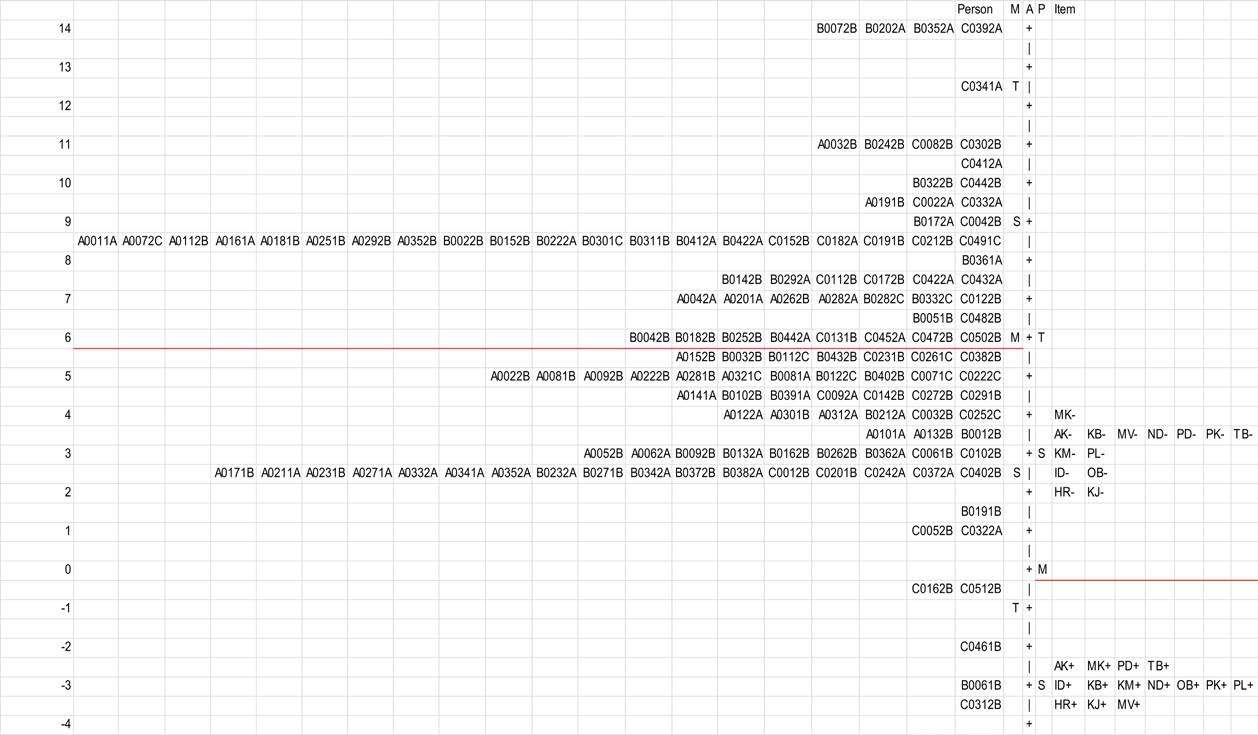
Figure 1: Wright-Map of EDL Participants and Study Items
4.2 Evaluation of Research Items
The study’s evaluation framework is organized into three key components:
- Work Implementation Component: This component consists of four questions designed to assess the participants’ performance in terms of quality, productivity, ability to provide guidance, and overall effectiveness in carrying out tasks. This component is represented by yellow.
- Strategic Planning Component: This section includes two questions that evaluate participants’ comprehension of strategic planning, encompassing their understanding of organizational policies, objectives, and goals. This component is symbolized by the colour orange.
- Self-Assessment Component: Comprising eight questions, this component focuses on the evaluation of participants’ attitudes and soft skills, indicated by the color green.

Figure 2: Wright-Map Item Study Excerpt
4.3 Key Findings
Among the three components, the Self-Assessment Component exhibited the most substantial improvement, recording an increase of 213.33%. The Strategic Planning Component followed closely, showing a 207.58% increase, while the Work Implementation Component demonstrated a 175.05% improvement.
Within these components, the HR item displayed the most significant growth, with a remarkable increase of 288.72%, whereas the MK item recorded the lowest increase at 166.75%.
A more detailed analysis reveals that four of the top five items showing the most considerable improvement belong to the Self-Assessment Component: HR (ranked 1st), KJ (2nd), ID (3rd), and KM (5th). The OB item, ranked 4th, is part of the Strategic Planning Component.
4.4 Implications
The substantial improvement in the Self-Assessment Component underscores the course syllabus’s effectiveness in achieving its intended outcomes. This finding strongly indicates that the course has successfully facilitated the personal development of the participants, focusing more on self-improvement than on elements like strategic planning and work performance. This alignment with the course objectives is an encouraging sign that the syllabus is meeting its educational goals.
| Table 2: Item Study Statistics BEFORE-AFTER | ||||
| SELF-ASSESSMENT | ||||
| Code | Item | BEFORE | AFTER | DIFFER (%) |
| MV | The ability to motivate oneself | 3.45 | (-3.48) | (-200.87) |
| KB | Embracing changes in attitude and new ways of working | 3.37 | (-3.16) | (-193.77) |
| ND | The ability to enhance self-worth | 3.32 | (-3.16) | (-195.18) |
| TB | Improving negative/unproductive work habits | 3.28 | (-2.72) | (-182.93) |
| KJ | Collaborating in a team | 2.17 | (-3.74) | (-272.35) 2 |
| KM | Capable of using good communication skills | 2.88 | (-2.91) | (-201.04) 5 |
| ID | Managing good self-image skills | 2.53 | (-3.16) | (-224.90) 3 |
| HR | Respecting colleagues and superiors | 1.95 | (-3.68) | (-288.72) 1 |
| 22.95 | (-26.01) | (-213.33) | ||
| STRATEGIC PLANNING | ||||
| PL | Understanding the policies and planning for the department’s digitalization | 3.19 | (-3.16) | (-199.06) |
| OB | Having personal goals and objectives in carrying out tasks | 2.75 | (-3.23) | (-217.45) |
| 5.94 | (-6.39) | (-207.58) | ||
| IMPLEMENTATION OF WORK | ||||
| MK | The ability to improve work quality | 3.88 | (-2.59) | (-166.75) |
| PD | Capable of providing advice and guidance | 3.67 | (-2.53) | (-168.94) |
| PK | Increasing work productivity | 3.28 | (-2.78) | (-184.76) |
| AK | Capable to carry out organizational activities effec-tively. | 3.32 | (-2.72) | (-181.93) |
| 14.15 | (-10.62) | (-175.05) | ||
| Table 3: Item Study Statistics BEFORE-AFTER | |||
| Item | BEFORE | AFTER | DIFFER (%) |
| Self-Assessment | 22.95 | (-26.01) | (-213.33) |
| Strategic Planning | 5.94 | (-6.39) | (-207.58) |
| Implementation Of Work | 14.15 | (-10.62) | (-175.05) |
5.0 CONCLUSION
The evaluation of the course outcomes shows that the PTM participants have significantly improved in key areas, particularly in building positive workplace relationships. They now recognize the importance of respect towards colleagues, subordinates, and leaders, enhancing their interpersonal skills—a vital aspect of strong leadership (Kouzes & Posner, 2023).
Additionally, theofficershavedevelopedamorecooperativeattitude, reflectedstrongerrelationships and promoted teamwork and collaboration, essential for organizational success. They are also more mindful of their professional appearance, contributing to a refined image as public officers. This attention to personal presentation signifies a commitment to professionalism in public service roles.
In terms of strategic planning, the officers exhibit greater perseverance and commitment, aligning personal goals with the organizational mission. This alignment fosters dedication, which likely leads to improved service delivery.
Moreover, their communication skills have significantly improved, crucial for effective leadership. Given its importance, it is recommended that the course syllabus continue to prioritize communication training (Kouzes & Posner, 2023).
5.1 SUGGESTED IMPROVEMENTS AND POINTS OF VIEW
To enhance the effectiveness and relevance of the EDL course, several strategic improvements are recommended:
- Syllabus Review and Update: Regularly review and update the course syllabus to keep it relevant. Focus on revising examples and activities in areas with lower achievement levels (see Table 3) to ensure alignment with current practices and participant needs.
- Continuous Training for Teaching Staff: Invest in the ongoing professional development of instructors to maintain high teaching standards. Training should enhance their mastery of course content, presentation skills, and engagement techniques.
- Identifying and Supporting Potential Teaching Staff: Identify teaching staff with strong interest and potential in course delivery. Encourage them to diversify their teaching methods and deepen their content expertise, fostering a dynamic learning environment.
- Refining Participant Selection Procedures: Streamline the selection process for course participants to ensure the right individuals are chosen. This will tailor the course to those who will benefit most from its content.
- External Recognition of the EDL Syllabus: Seek recognition of the EDL syllabus from relevant external bodies to enhance its credibility and establish an external benchmark for continuous improvement.
- Development of Improved Measurement Instruments: Create more sophisticated tools for evaluating the course’s effectiveness. Better instruments will provide accurate assessments of its impact and guide future enhancements.
- Expansion of Course Implementation: Expand the EDL course to include a broader range of participants from various grades and positions, maximizing its impact across the organization and promoting leadership development at multiple levels.
6.0 SUMMARY
In conclusion, the Empowering Digital Leaders (EDL) Course has demonstrably yielded a positive impact on its participants. The course’s effectiveness in enhancing leadership qualities, strategic planning capabilities, and professional communication skills among the PTM is evident. However, to maximize its potential and ensure that the course objectives are fully realized, it is essential to implement the program with greater commitment and structured organization. By doing so, the EDL course can achieve a broader and more profound impact, aligning with the objectives set forth and contributing significantly to the development of digital leadership within the organization.
BIBLIOGRAPHY
Shahzad, M. U. (2024). Core competencies for digital leadership development: a perspective from the lens of paradox theory. The Bottom Line Managing Library Finances. https://doi.org/10.1108/ bl-10-2023-0278
Kouzes, J.M., & Posner, B. Z. (2023). The Leadership Challenge. John Wiley & Sons. http://books ?id
=vhWcEAAAQBAJ&printsec=frontcov-er&dq=kouzer+and+posner&hl=&cd=7&source=gbs_api
Creswell, J. W., & Creswell, J. D. (2017). Research Design: Qualitative, Quantitative, and Mixed Methods Approaches (5th ed.). Sage Publications.
Fowler, F. J. (2014). Survey Research Methods (5th ed.). Sage Publications.
Sekaran, U., & Bougie, R. (2016). Research Methods for Business: A Skill-Building Approach (7th ed.).
Wiley.
Kusainov, A. K. ., Yessenova, K. A., Kassymova, R. S., Moldassan, K. S. ., & Sembayeva, A. M. . (2021). Comparative Analysis of the Process of Training Education Managers in Educational Institutions. International Journal for Research in Vocational Education and Training, 8(2), 186–207. https:// doi.org/10.13152/IJRVET.8.2.3
Bond, T. G., & Fox, C. M. (2015). Applying the Rasch Model: Fundamental Measurement in the Human Sciences (3rd ed.). Routledge.
Kubiszyn, T., & Borich, G. D. (2016). Educational Testing and Measurement: Classroom Application and Practice (11th ed.). Wiley.
Boone, W. J. (2016). Rasch Analysis for Instrument Development: Why, When, and How? CBE—Life Sciences Education, 15(4), rm4. https://doi.org/10.1187/cbe.16-04-0148 Hidayatullah, M. S., Thaibah, H., Maulidina, A. P., & Ramadhan, M. Z. (2022). Development of the MCDL Day’s Instrument as a Personality Measurement Tool compared to the Papikostick Test Tool. Journal of Educational Health and Community Psychology, 11(1), 154. https://doi.org/10.12928/ jehcp.v11i1.22287